I
love election days. Last Saturday was a Federal Election day in Australia. These days are a community event; a common, civic enterprise –
and one in which the majority of Australians are happy to participate,
even if it is compulsory.
Then what’s with a non-elected Head of State?
As King Arthur said to Dennis the Peasant from Monty Python, "You don't vote for
Kings!
In Australia there were public holidays on 14 March 2022 that coincided with 2022
Commonwealth Day, such as Canberra Day in the ACT, Labour Day in Victoria,
Adelaide Cup Day in South Australia, and Eight-hour Day in Tasmania. Nowhere in
any Australian media did there appear any discussion on Commonwealth Day. No crickets,
just silence!
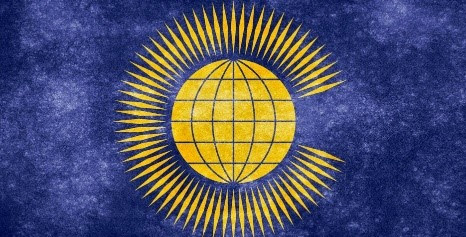
Commonwealth Day is meant to be a day of
observance by approximately one billion people of their common bonds and the
contribution of the Commonwealth of Nations to the
creation of a harmonious global environment. However, the only activity
connected to Commonwealth Day appears to be the British royal family attending a church service. Commonwealth Day
is marked by an Anglican service in Westminster Abbey normally attended by Queen Elizabeth II as the Head of the Commonwealth, some of
the British royal family, and Commonwealth ambassadors.
The 2020 Commonwealth Day Service was famously the last official
public event for Prince Harry before leaving Britain
for North America to take his journey towards his desired financial
independence.
Queen
Elizabeth II missed the Commonwealth Day annual
service this year at Westminster Abbey for the Commonwealth of 54 nations which
she heads. Prince Charles stepped in to act in her
place.
Following the death of Queen Victoria
on 22 January 1901, there was a call to remember her long reign. On 24th May each year, Queen Victoria’s birthday, an annual
commemoration was held from 1902 to commemorate the formation of the British
Empire in India and other colonies of Britain. Empire Day was directed
especially at school children to promote loyalty among the dominion countries
of the British Empire. Empire Day, often called Cracker Night, was celebrated
by lighting fire-works in back-gardens and attending community bonfires.
With the
surge for independence from the British Empire in the late 1950s, the
British prime minister Harold MacMillan announced in 1958 that
Empire Day would be changed to Commonwealth Day as the annual celebration of
the Commonwealth of Nations. The date of Commonwealth Day was changed to 10th
June, to match with the official birthday of Queen Elizabeth II. However, it
was again switched in 1977 to the second Monday in March as no Commonwealth country
had a public holiday on that day and almost all countries had school terms.
In 2022,
Queen Elizabeth II is going platinum, celebrating her 70th
anniversary of ascension to the British throne. In an
effort to save the Commonwealth as an institution identified
with British royalty, the working royals are being sent to the far-flung parts
of the old British Empire to shore up the celebration of Queen Elizabeth II’s
Platinum Jubilee. However,
the British royal family are having a staff shortage.
Harry, Meghan and Andrew are out, Philip has died, and the Queen has been
forced to take it easy.
“Will the British Royal Family Survive?"
First through airport gates was Prince William and his wife Kate, the Duchess of Cambridge who headed back to the Caribbean
on a whirl-wind tour to Jamaica, Belize and the Bahamas from 19-26 March 2022 to
mark the Queen’s Platinum Jubilee. This was five months after Barbados declared itself a republic.
The seven-day
tour plunged into controversy on several occasions. During the visits to
Belize, Jamaica, and The Bahamas the couple made significant changes to their
itinerary as backlash grew from locals who
referenced the tour as a colonialist "slap
in the face".
The three
day visit to Jamaica was marred by Britain’s role in the transatlantic slave trade. The couple’s visit to
the country gave the nation the opportunity to address ‘unresolved’ issues. Jamaica’s prime minister, Andrew Holness
told the Duke and Duchess of Cambridge that his country is ‘moving on’, intending to become a republic.
After the
decision by Barbados to remove the Queen Elizabeth II as Head of State, Prime
Minister Holness said in December that ‘there is no question that Jamaica has to
become a republic’.
In the middle of overwhelming floods and skyrocketing
COVID cases, Princess Anne, 17th in line of succession
to the British throne, jetted into Sydney on 9 April 2022 for a three-day visit
to open the Bicentennial Sydney
Royal Easter Show. As well as being patron of the Royal
Agricultural Society of the Commonwealth, she is also president of the Royal
Agricultural Society of the Commonwealth. Princess Anne followed the Australian
visit with a whirlwind tour of Papua New Guinea from 11 -13 April 2022.
Also, from 22-28 April 2022, Prince Edward and wife Sophie, the Earl and Countess
of Wessex were slated to travel to Antigua and Barbuda, Grenada,
St Lucia, and St Vincent and the Grenadines. However, there are leading politicians in St Lucia and St Vincent and the
Grenadines also pushing
for republics in the Caribbean. It seems
unlikely any Caribbean country will have the British monarch as Head of State
by the end of this decade.
The
Commonwealth of Nations is not a supranational body. It stopped being a
military alliance when Britain turned its back on Australia with the Fall of Singapore in 1942, and stopped
being a trade alliance in 1973 when Britain became a member of the European Common Market and turned its back on
Australian producers. Instead, it is a group of organisations, often referred
to as the Commonwealth ‘family’. However, most of the organisations that exist
appear to ostensibly promote the Commonwealth focus on the British royal family
and the monarchy.
The
Commonwealth’s greatest challenge is that it is closely associated with the British
royal family, who use the organisation as a way of trying to project themselves
as part of Britain’s ‘soft power’ in the world.
Queen Elizabeth
II has been Head of the Commonwealth since she assumed the position in 1953. In 2018, the CHOGM meeting voted to appoint Prince Charles as the next Head of the
Commonwealth and succeed
the Queen in the honorary, non-hereditary position as Head of the Commonwealth.
The British royals continue to insist the Commonwealth is about them, Britain
and their dream of empire.
It’s time
the British royal family disconnects from the Commonwealth of Nations.
“Why the Commonwealth should ditch the
royals”
The backlash
received by Prince William, and the Duchess of Cambridge during the Carribean royal
tour during March 2022 has led to growing speculation as to whether more of the
15 Commonwealth realms may soon seek to become a republic. As he was about to
board his flight back to Britain after the disastrous tour, Prince William said:
“he understood he may never succeed the Queen
and the Prince of Wales as head of the Commonwealth, as he vowed not to be
“telling people what to do” amid growing republican sentiment throughout the
former British Empire.”
The example
of the transition of Barbados to a parliamentary republic on 30 November 2021
could spark the ‘New Commonwealth’ dominoes to fall. Barbados demonstrated clearly that the transition to a republic does not mean leaving the Commonwealth. They didn’t even
have to apply to re-join as their membership just automatically rolled over.
The majority
of Commonwealth countries are republics, with over 90% of Commonwealth citizens
living in republics. It’s time Head of the Commonwealth is rotated among
Commonwealth leaders. Each country should take its turn to head the
Commonwealth, not the Queen and the British royal family.
Australia's lack of
interest in Commonwealth Day reflects our desire to break from the British royals
and become a republic. Perhaps
the reason for the aching silence is the utter irrelevancy of the institution
of monarchy in the daily lives of Australians, and arguably all other member
nations of the Commonwealth.
All this discussion brings up
the issue of an absent Head of State — bring on a resident for president!
Australian
life has been undergoing processes of change for a long time - 56 years
ago today, decimal currency replaced Imperial pounds, shillings and
pence in Australian commerce. Four years after that, we replaced
Imperial measurement with the metric system. We look forward to the day
we replace a British royal with an Australian as our Head of State.
The Australian Republic Movement unveiled at the
Federation Pavilion in Sydney’s Centennial Park on Wednesday 12 January 2022, its
model for an Australian republic, including the preferred method for the nation
to vote for our own Aussie Head of State.
Buckingham Palace is now making
preparations for the end of the Queen’s reign. Prince Charles
is reportedly taking on
a number of responsibilities for The Queen, as heir to the British throne.
Australia has been preparing too, including working towards the reforms needed
for Australia to become a republic.
In January 2020, the ARM adopted a
new strategic approach
to building public consensus about the reforms that should be taken to a
referendum. This involved extensive public consultation, public opinion
research and consultation with academics and parliamentarians about the way
forward continued throughout 2020 and 2021.
The primary barrier to Australia
becoming a republic is not the British Monarchy, but uncertainty. To win that
change, a referendum on the republic must achieve a double majority; a majority
of votes nationally and a majority in four out of six states. So, any
proposition for a republic must be capable of securing majority support in
advance of any referendum campaign.
The Australian republic has been
our nation’s great unfinished project.
The unveiling by the Australian
Republic Movement of a model for all Australians to
get behind is a leap towards creating our own independent nation.
It has been
clear for decades that Australians want the final say about who our Head of
State is.
The 1998 Constitutional Convention held in Old
Parliament House, Canberra from 2-13 February 1998 had been given the brief to
consider the pros and cons of removing the Monarchy from a role in Australian
government and law and changing the Australian Constitution to include a
republican form of government.
The
Constitutional Convention was convened by former Prime Minister John Howard to discuss
issues related to three broad questions about whether or not Australia should
become a republic. The three questions identified for discussion by the Prime
Minister were:
Whether Australia should become a republic;
Which republic model should be put to the electorate to
consider, against the status quo; and
In what time frame and under what circumstances might any change be
considered.
If the consensus
was "Yes", then a republican model was to be decided on, so it could
be put to the Australian people in a referendum on 6 November 1999.
The Direct Election Model where the popular election for president
would be held at the same time as those for the house of representatives.
The Hayden Model proposed the popular election for president where
a person had been nominated by one per cent of voters.
The McGarvie Model proposed the president be chosen by the
prime minister and appointed or dismissed by a constitutional
council.
The Bi-Partisan Appointment of the President Model developed by the
Australian Republican Movement, where the president was appointed by the
prime minister after ratification by a 2/3 majority of Federal Parliament.
However, the 1998 Constitutional Convention became caught
up in an argument about the best selection method for the Australian Head of
State and it was on this crucial issue Australian republicans divided, resulting in
the splitting of the vote at the 1999 republic referendum and the loss of the
vote.
Prime Minister
Malcolm Turnbull said during his
speech to the Australian Republic Movement’s (ARM) 25th Anniversary Dinner on
18 December 2016:
“So, if the job
description is to be a non-political head of state, the best way to appoint
them we felt at the time, was in a bipartisan manner. This exposed us of course
to the claim that the ARM model was “a politician’s republic. We were told that
you can’t trust politicians — ironically most vocally by politicians.”
The ARM model, aptly named the Australian Choicemodel, proposes that Australia’s parliaments nominate
candidates for Head of State, who would be put to a national ballot of all
Australian voters. The Head of State would be elected for a five-year term and
be responsible for appointing as Prime Minister the person who has majority
support in the House of Representatives, or calling an election if no-one can
obtain that support. The Head of State would have no individual authority in
relation to the setting of government policy, day-to-day governance or passing
of laws, which remains the responsibility of the parliament, Prime Minister and
Cabinet.
ARM National Chair, Peter FitzSimonssays
the ‘Australian Choice’ model means citizens elect their own leaders. To ensure
that there is manageable choice between our most respected and trusted
citizens, Australia’s parliaments will nominate a short list of up to 11
candidates – one from each state and territory parliament and up to three by
the Federal Parliament. This will ensure strong representation from across the
country and a genuine choice. Sitting parliamentarians will be prohibited from
standing for election.
The Head of State would be responsible for appointing as Prime Minister
the person who has majority support in the House of Representatives, ensuring
that the commission of a Prime Minister ends if another person commands that
support, or calling an election if no-one can obtain that support. The Head of
State will not have the power to dismiss a Prime Minister who retains majority
support in the House of Representatives, but would have the power to summon the
House of Representatives to determine if the Prime Minister retains that
support. They will act on the advice of Government on all other matters.
ARM National Chair Peter FitzSimons said that the Australian Choice model ensures
Australians will have a robust choice from eminently qualified, suitable
candidates to represent them as Head of State.
“We’ve
consulted, we’ve listened closely and Australians have told us this approach
will give our nation the best chance of success at a referendum, with an
overwhelming majority of Australians likely to back the change.
This will give
all Australian voters a merit-based choice about who speaks for them as Head of
State. The decision will be in their hands, unlike now, where it is luck of the
draw who we get from the British Royal Family.
I would like to thank
both the thousands upon thousands of Australians who shared their views with us
so we could take this historic step forward, and the constitutional experts who
helped us refine it”.
The dreams of
Australia’s republic supporters lay in tatters with the failure of the 6
November 1999 Referendum. On that evening, the then ARM National Chair, Malcolm
Turnbull, said Prime Minister John Howard "broke
this nation’s heart" over the failed Republic Referendum result.
"These days
turned out nothing like I had planned",
but continued a
few lines later that
"it’s
coming round again, the slowly creeping hand of time".
The Australian
Republic will happen — we are a republican people, it’s now a matter of making
us a republican nation.
The Australian Choice Model is time for republicans to start
“mending our hearts”. For the first time in over twenty years it delivers a
genuine choice of Australia’s most respected and trusted citizens so that all
the Australian people can vote in a Head of State who represents us all.
For the first time, Australians – all Australians – will have a say in
who represents us as Head of State.
Choosing an Australian Republic is about choosing to take our own affairs
into our own hands. With an Australian Head of State chosen by all of us, our
future, more than ever will be in Australian hands.