Monday, April 12, 2021

Prince Philip passes away, years after Australian knighting controversy

The death of Prince Philip, the Duke of Edinburgh on 9 April 2021 at the age of 99 has brought global reflection on his enduring part of the Elizabethan regal story. In particular, many remembered his sense of duty in public life, significant contribution to community organisations, and unwavering support to his Monarch. It also reduces the number of Australian Knights by 25 per cent.

Chair of the Australian Republic Movement (ARM) Peter FitzSimons expressed his condolences to the British Royal Family on behalf of the ARM following the passing of Prince Philip:

'For almost 70 years he provided unwavering support to Australia’s Head of State, Queen Elizabeth II, making a significant contribution to the community as Consort of the British Monarch and patron of more than 800 organisations. His service shaped the lives of hundreds of thousands of people.'

However, the lasting effect Prince Philip had on the Australian community occurred on Australia Day 2015, when then-Prime Minister Tony Abbott made his “captain’s pick” and appointed him an Australian Knight, within the recently expanded Order of Australia award system. The public exploded and the Australian Republic Movement’s webservers melted down.

Prime Minister Abbott’s actions reminded Australians what elitism really looks like and succeeded in highlighting that the concepts of both a royal family and royal honours are elitist nonsense.

The Order of Australia is an order of chivalry established on 14 February 1975 by Queen Elizabeth II, to recognise Australian citizens and other persons for achievement or meritorious service. Before the establishment of the Order, Australian citizens received British honours.

It was Prime Minister Gough Whitlam who axed knighthoods in 1975, only to watch Malcolm Fraser reinstate knights and dames a year later.

Then, in 1986, Prime Minister Bob Hawke abolished the category all over again. John Howard is understood to have rejected the idea of reinstating knights and dames, on the grounds the endless chopping and changing was undermining the dignity of the honour.

In December 2013, Prime Minister Tony Abbott, who had been the former director of Australians for a Constitutional Monarchy, had ruled out restoring the British tradition of knighthoods and dameships.

However, within three months, Abbott had done a complete about-face and reintroduced an outdated and unwanted style of honour to Australia without consultation with his Federal frontbench. The honour was to be known as a knight or dame in the Order of Australia and would be the nation's highest award.

At the time, the Prime Minister said he believed this was:

“... an important grace note in our national life.”

On 19 March 2014, on the Prime Minister’s recommendation, Queen Elizabeth II approved amendments to the Letters Patent for the Order of Australia to reinstate the appointment of knights and dames of the Order of Australia.

On 27 March 2014, when Prime Minister Abbott introduced the archaic British aristocratic titles above the Australian national honours system, Australians flooded the Australian Republic Movement website.

David Morris, National Director of the Australian Republic Movement, stated at the time:

“Since Mr Abbott’s announcement about "knights and dames", our annualised membership growth rate has spiked to about 5,000 per cent. Many are re-joining, having previously been members. Many are people who say they voted for Mr Abbott’s Government but are dismayed by his personal decision, apparently made only in consultation with the Queen.”

Under the new system, the retiring Governor-General Quentin Bryce became the first dame and her successor, Peter Cosgrove, automatically became the first knight when he was sworn in as Governor-General on 28 March 2014. Also appointed at the same time was the Governor of New South Wales, Marie Bashir.

Abbott’s new system allowed the Queen to bestow up to four knights or dames per year, on the recommendation of the prime minister, to recognise extraordinary and pre-eminent Australians for their service to Australia and humanity.

Australian historian James Curran wrote in the Canberra Times that:

'In the symbolic landscape of Australian civic culture, Tony Abbott’s restoration last week of Australian knights and dames perhaps stands as one of the most pompous, pretentious, nostalgic and self-indulgent prime ministerial decisions in a generation.'

On Australia Day 2015, Prime Minister Tony Abbott's 2014 decision to restore Imperial knighthoods became even more bizarre, when he used the Australia Day Honours List to award the second and third AKs in the restored Knight of the Order of Australia division to His Royal Highness, Prince Philip, Duke of Edinburgh and Air Chief Marshal Angus Houston.

One was the Chair of the Council for the Order of Australia and the other was the husband of the British Monarch.

Grandfather Royal, Prince Philip, received his AK for his contribution to Australia throughout the Queen's 62-year reign, and it was his due to his long life of service and dedication Prime Minister Abbott “picked” him to be honoured by Australia. Special mention was also made of the Duke of Edinburgh Awards in Australia, which he said had positively influenced the lives of hundreds of thousands of young Australians.

In the lead-up to Australia Day 2015, there had been no media about the awarding again of any Australian Imperial honours. The Australian of the Year awards had been well publicised, but not the possible “knights and dames” appointments.

The reaction from the Australian people was largely satirical and fundamentally bemused.

As a Palace spokeswoman said at the time:

“Knights and dames in the Order of Australia are approved by the Queen on recommendation of the Prime Minister. We wouldn't comment further on the process.”

The reaction at the time from Australians on all sides of politics showed that Imperial honours are divisive and out of touch with a modern, multicultural, egalitarian Australia. Our identity is Australian, not colonial.

On 2 November 2015, two months after coming into office, the first significant policy change for the new Turnbull Government was to call it a knight on titles, when he announced that the Queen had approved his request to amend the Order's letters patent and cease awards at this level.

This was after Federal Cabinet had, at his suggestion, agreed that the titles were no longer appropriate in the modern awards system. The formal removal by Prime Minister Malcolm Turnbull of one of Tony Abbott’s most unpopular "captain’s picks" resolved a national embarrassment.

The 2014 announcement by then Prime Minister Tony Abbott of a return of knighthoods for Australians echoed of a "bunyip aristocracy" continuing to chip away at modern Australia. Monarchist teacup warriors seemed to be again recycling Australia back to a past that no longer reflected 21st Century Australia.

Perhaps it’s our fascination with modern fictional royalty that helps bolster offline royalty these days. Royalty comes and royalty goes, but it is never a part of us. For us in Australia, royalty only ever visits us from somewhere else, from across the seas. It’s not something that lives with us, is part of us, except in our imaginations and creative fantasies when we are binge-watching The Crown.

Surely, it’s time to make the case for Australia to have a Head of State that is one of our own — not someone from the other side of the world.


Thursday, March 25, 2021

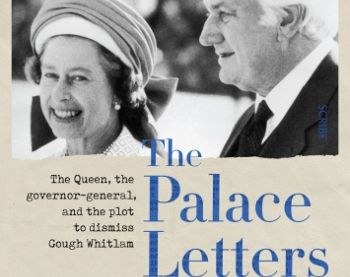
BOOK REVIEW - The Palace Letters

Recently there have been conclusions the British Monarch was involved in Australia’s 1975 constitutional crisis. Professor Jenny Hocking latest book finally reveals the truth of the secret Palace letters.

The Palace Letters – The Queen, the Governor-General and the plot to dismiss Gough Whitlam – is the groundbreaking result of historian Professor Jenny Hocking’s fight to expose secret letters between the Queen and the Australian Governor-General during the Dismissal of Gough Whitlam in 1975.

In this gripping and true court drama, Professor Jenny Hocking describes her years-long legal battle to uncover letters between Queen Elizabeth II and Sir John Kerr in which the two discussed the 1975 Dismissal of the Whitlam Government. Hocking also provides a piercing analysis of both the extreme efforts made to stop her and what the letters themselves revealed.

Whitlam was a progressive prime minister whose reforms proved divisive after two decades of conservative leadership in Australia. When he could not get a budget approved, it sparked a political deadlock that culminated in his unexpected and deeply controversial Dismissal by Governor-General Kerr.

This Dismissal of the elected Prime Minister by the appointed Governor-General remains one of the most dramatic events in Australia’s political history and began the modern republican movement.

However, as the Australian Republic Movement (A.R.M.) National Chair Peter FitzSimons commented:

'... nothing has changed since 1975 to stop this happening again. And next time, it might not be an adviser to Queen Elizabeth having these kinds of secret meetings on Australia’s internal affairs, but a courtier of none other than King Charles...’

The 1975 Palace letters from Kerr to the Queen about Whitlam’s Dismissal are documents fundamental to an exploration of a watershed moment in Australia, redefining its sense of identity.

Jenny Hocking is Emeritus Professor at Monash University, Distinguished Whitlam Fellow at the Whitlam Institute at Western Sydney University and former Prime Minister Gough Whitlam’s award-winning biographer. She had long desired to access these hidden letters that shed light on a Prime Minister kept in the dark.

The Palace letters are 212 letters exchanged between Governor-General Kerr and Buckingham Palace between 15 August 1974 and 5 December 1977. They include attachments such as newspaper clippings, press releases, articles, speeches and booklets. A small number of telegrams are also included.

Most of the letters were exchanged between Kerr and Sir Martin Charteris, private secretary to the Queen, in the mid-1970s. The private secretary passed the material to the Queen and usually responded on her behalf. The critical factor about these 212 letters is the supposed political neutrality, at all times, of a constitutional monarch — these letters are anything but neutral.

Secret 'Palace letters' could illuminate Whitlam Dismissal if finally released

Professor Hocking first sought access to the Palace letters from the National Archives of Australia in 2011 and again in 2015, but was refused. Aided by a crowd-funded money-raising campaign and a stellar legal team prepared to work for her on a pro-bono basis, she then took legal action to gain access to the documents.

The Federal Court rejected her arguments in 2018 and the Court rejected her appeal against the decision in 2019. Hocking appealed this decision in the High Court on 4 February 2020 and the Court’s judgement in her favour was handed down on 29 May 2020. 

The judgement required the release from the National Archives of Australia for public access of the about 1,200 pages of once-secret correspondence between Governor-General Sir John Kerr and Sir Martin Charteris — even though Buckingham Palace had previously vetoed the release of the correspondence until 2027 and fought to keep the letters secret.

Upon this release, A.R.M. National Chair Peter FitzSimons said:

'This is a significant victory for Australian sovereignty and democracy. These letters provide a crucial historical context around one of the most destabilising and controversial chapters in Australian political history… The Palace has claimed it had no involvement in the decision. This will put that to the test.'

In August 1978, David Smith, official secretary to Governor-General Kerr, deposited this correspondence into the custody of the National Archives of Australia. From then on it had remained hidden there, protected from public scrutiny through its designation as "personal".

However, Kerr had a copy made of the Palace letters to assist him with writing his memoirs and it was these documents that were included in his "personal papers", lodged with the National Archives. When Hocking found references to their existence, it was these she attempted to access, claiming they were no longer under Buckingham Palace control.

The High Court ruled the copied letters were the property of the Commonwealth, not private correspondence between the Monarch and Sir John Kerr. In the end, it was Kerr who went outside protocol resulting in a loss of control by the Palace.

The National Archives of Australia released the Kerr Palace letters on 14 July 2020. National Archives Director-General David Fricker said all the letters would be released without exemption.

Royal accolades piled on Sir John Kerr after the dismissal

Professor Hocking was then able to draw on never-before-published material from Kerr’s archives and submissions to the Court, tracing the collusion and deception behind the Dismissal. She charts the role of High Court judges, the Queen’s private secretary and the Leader of the Opposition at the time, former Prime Minister Malcolm Fraser, in Kerr’s actions — and prior involvement of the Queen and Prince Charles in Kerr’s planning.

One of the seismic shifts that become evident from Hocking’s book is that the teacup warriors of the monarchists' main age-old chant that the governor-general is the real head of state – and that a monarch's only role is to appoint or remove a governor-general of the day on the advice of the prime minister – is a total furphy.

Former Prime Minister Malcolm Turnbull writes in the forward of The Palace Letters how Charteris and Kerr discussed the ‘political and constitutional circumstances of the time in considerable detail’, with Charteris providing advice to Kerr – and then a lack of advice – and giving indications of how the Queen would react to certain circumstances, which went against the non-active involvement that is expected of a monarch.

Hocking writes:

'The critical factor about these letters is that a constitutional monarch must remain politically neutral at all times. That's the defining feature of a constitutional monarch within a democratic parliamentary structure. And the breach of that fundamental requirement has happened from the very first letter from Kerr.'

In The Palace Letters (p.221) Hocking documents a common theme throughout all the archival material:

'... the involvement of the Palace in every step Kerr took and every decision he made, regarding the Dismissal and gathering aftermath, including even his own resignation. It is impossible to separate Kerr’s decisions from his intractable view of his "duty" to the monarch and the monarchy, presented to him so clearly in the months before the Dismissal by the unctuous Sir Martin Charteris.'

For 45 years the Palace maintained the Queen played no part in Kerr’s decision to dismiss the Government. Of course, this could not be challenged due to the embargo over her correspondence for decades. The High Court decision to release the Palace letters has shattered these claims of “royal neutrality and non-involvement”.

Former Prime Minister Gough Whitlam did not live to see the Palace letters released, but maintained until his death in 2014 that he had been misled by Sir John Kerr. Whitlam wrote in The Truth of the Matter that when told by Sir John that he had been dismissed, he asked him: “Have you discussed this with the Palace?” Sir John replied: “I don’t have to, and it’s too late for you.”

It is in this unprecedented communication with the Queen while failing to discuss the possibility of dismissal with the Prime Minister, that full scrutiny is required.

The Palace Letters show it is absurd how an Australian governor-general reports to Buckingham Palace in a manner not much different from that of a 19th-century colonial governor. Australia’s head of state should be one of us.

According to the A.R.M.:

' [A.R.M.] want a head of state who'll be present at ANZAC Day. We want a head of state who’ll come and watch the footy grand final. We want a head of state who understands and appreciates Australian culture — from the democracy sausage to our Indigenous history.'

As Mr FitzSimons told The New Daily:

" [Hocking's historical work] will generate focus on the sheer absurdity of an unelected person from an aristocratic family in England having anything at all to do with what should happen to our democratically elected leader."

The Palace Letters has advanced the cause of an Australian republic.

The final words can be left to Jenny Hocking (p.231):

' [It’s time] we complete the post-colonial project of national autonomy, as an Australian republic, with an Australian head of state and in control of our own history.'


 The Whitlam's - Gough


Friday, January 01, 2021

National Anthem change to ‘One and Free’ on Australia’s birthday

Today, Australia celebrates 120 years as a federated nation. However, this morning Prime Minister Morrison announced a change to second line of Advance Australia Fair from ‘For we are young and free’ to ‘For we are one and free’. He stated “[One and Free] recognises the distance we have travelled as a nation”.  

I agree.

This small lyrical change is another step towards the independence and inclusivity of Australia.  


 “We are Australian” by Bruce Woodley and Dobe Newton is a popular Australian song that celebrates the diversity of Australian society through the line “I am, you are, we are Australians”. In 2020, we are one, but we are also many.

In 1900, after years of drafting and debating, Australia’s Constitution was passed by the British Parliament and given royal assent by Queen Victoria in July; Australia’s six British colonies were destined to become one nation on 1 January 1901.  

It had been determined that the ceremony proclaiming the Inauguration of the Commonwealth would occur in Sydney.

In 1901, Australia considered itself a ‘young’ country that was still tightly bound to Britain in terms of its people, economy, military and politics. Over the past 120 year’s Australia has matured as a nation and, as our Prime Minister announced today, we are no longer ‘young’.

Today Britain stepped away from the European Union. If Brexit is now a reality, surely it must be time for Australia to ‘cut the apron string’ with Britain and Ausexit.  

In 1901, there were close to 4 million people living in Australia and none had ever seen a party like the one held on Tuesday, 1 January 1901. Huge crowds gathered in the cities to take part in celebrations.

In Sydney, an eight-kilometre procession made up of brass bands, floats and important citizens wound through the city streets, which were lined with half a million people waving the Union Jack. A crowd of nearly 60,000 people gathered in Sydney’s Centennial Park to witness the proclamation of the Federal Constitution, uniting six former British colonies as one Commonwealth of Australia.

Centennial Park, Sydney. 1 January 1901.

As part of the ceremony, Queen Victoria’s official proclamation was read by Australia’s first Governor-General, Lord Hopetoun, and Federal ministers were then sworn in after a twenty-one gun salute. Australia’s first prime minister, Sir Edmund Barton, declared ‘A continent for a nation and a nation for a continent'.

1 January 1901 was the first day of Australia as a nation and the first day of the new century. The significance of the day was clear to all Australians. The day was one long celebration, with spectacle, parade and festivities.

Advance Australia Fair was adopted as the national anthem for the second time thirty years ago on 19 April 1984 by Bob Hawke’s Labor Government. It had first been chosen by the Whitlam Government in 1974 and later rejected by the Fraser Government.

Previous to this, the Australian national anthem was “God Save the Queen”. Like many things, it took a second attempt before the reform took hold.

In 1973, a competition was held for a distinctively Australian national anthem.

The Australian National Anthem Quest was run in two stages by the Australia Council for the Arts. The first stage for lyrics attracted more than 1,400 entries. The second stage for music received 1200 entries. A prize of $5,000 was offered for each stage.

However, the judges decided the entries did not meet the high standards of Australia’s traditional songs Advance Australia Fair, Waltzing Matilda and Song of Australia. The Australia Council for the Arts recommended the final choice for the national anthem should be made from these three songs.

The Bureau of Statistics ran a national poll of 60,000 people. Advance Australia Fair was favoured by 51.4% of people surveyed, followed by Waltzing Matilda at 19.6%.

But the decision did not stick. A change of government brought God Save the Queen back into use.

In May 1977, the Fraser Liberal Government had the Australian Electoral Office conduct a poll, or plebiscite for the national anthem in conjunction with a referendum. Advance Australia Fair was the clear favourite with 43.3% of the vote, ahead of Waltzing Matilda with 28.3%, and God Save the Queen at 18.8%, and Song of Australia on 9.6%.

Yet even that overwhelming vote did not see an Australian anthem restored — until 19 April 1984.

Just why Australian governments are so slow to assert Australian independence is hard to fathom. There was no popular mandate for God Save the Queen, just as there is no popular mandate any more for the constitutional link to the British monarchy. But time will catch up with even the slowest urge to reform.

Australia is now in every sense a nation, with our Parliament fully in control of our affairs at least since the Australia Act of 1986, when the ability of the UK Parliament at Westminster to legislate for us was finally ended, as was legal appeals to the Privy Council in Westminster.

One reform remains.

We need our own head of state — someone who represents us, our national values, character and identity. The Queen does this for the UK, but that is her full time job and she can’t ever hope to truly represent modern Australia. And neither will her heirs, even if they so wanted to. 

It will, likewise, take a second attempt to cut Australia’s final Constitutional link to the British monarchy, to reflect the full independence that Australians already feel in their hearts.

The question is not whether this will happen, but when.