Today is the 25th anniversary of the Australian Republican Movement. On 7 July 1991, the Australian Republican Movement
was established, with the author Tom Keneally as the Inaugural Chair.
The Australian Republican Movement was formed as an organisation with
the single goal of Australia becoming a republic.
The old ARM logo
Republicanism emerged as an issue of major public debate during the 1990s. In the 1990s, the popular definition of "republic" was simply the
removal of the British monarch as Head of State. This was seen as the
last step in Australia’s political development.
Australians have long discussed
the idea of replacing the constitutional monarchy with a republican
constitution, even during the 19th century, before federation in 1901.
In the 1960s, republican activity was restarted by authors Geoffrey Dutton and Donald Horne. At the same time, the student magazine Oz lampooned the monarchy.
A decade on, the dismissal of Prime Minister Gough Whitlam by the appointed Governor-General on 11 November 1975 outraged many Australians. The 1975 Constitutional Crisis
drew attention to Australia's Constitutional arrangements and, since
those turbulent days, several notable Australians declared a commitment
to an Australian republic. There were many Town Hall meetings and calls
to "maintain the rage". During these years, the Australian Labor Party
edged towards declaring itself for the republic. This it eventually did in 1982.
The Australian Republican Movement began over
lunch at the residence of the former Premier of New South Wales, Neville
Wran.In 1987, Wran had publicly stated
his support for Australia
becoming a republic and nominated 2001, the centenary of Australia’s
federation, as an ideal date.He said that
he expected moves towards a republic would gain ground during the 1990s. Wran was supported at the time by Prime
Minister Bob Hawke. On 7 July 1991, a group of prominent citizens
held a meeting in Sydney
to launch a republican movement under the chairmanship of author Tom Keneally
and included many eminent persons from the political left and cultural centre
of Australian society.
The 1991 Foundation Members of the Australian Republican Movement were Tom Keneally, the late Geoffrey Dutton, the
late Professor Donald Horne, Jenny Kee, the late Franco
Belgiorno-Nettis, Franca Arena, the late Faith Bandler, Mark Day, Geraldine
Doogue, the late Colin Lanceley, the late Harry Seidler, Malcolm Turnbull, David
Williamson and the late The Hon Neville Wran. Tom Keneally was the first Chairman
and was succeeded by Malcolm Turnbull in November 1993.
On this day, 25 years after the birth of the Australian Republican Movement, Malcolm Turnbull is on a knife-edge electoral count to decide whether he will be elected for the first time by the Australian people as Prime Minister of Australia.
As England firmly turns
its back on the European project, and as Scotland and Northern Ireland
start to wonder whether they still want to be part of the United
Kingdom, Australians are loudly questioning our own relationship
with England.
The Scottish and the Irish are asking
the question. And so are we. Australians are asking whether it is right
that the Constitution of modern, multicultural Australia should
continue to be linked to the royal family of a country that is turning its back
on Europe, and in some ways, the world?
Now that the English royal
family represents Australia even less today than they did last week, how can we
still have the English monarch as our Head of State? Now, more than ever, Australia needs a
Head of State that represents Australia, and sends a message to the global
community that we are a modern, multi-cultural Asia-Pacific nation.
The best possible response to Brexit is
Ausexit - to finally replace our hereditary English monarch with an
Australian, whether elected by our people or appointed by our Parliament,
who represents the best of us, and says to the world,
The Australian Republican Movement
Chair, Peter
FitzSimonshas
said the membership of the ARM over the past few days
“is
suddenly surging once more, and did so from the very moment the vote came in."
The Australian Republican Movement argues an accelerated end to the British Monarchy in Australia
will help promote our trade relationship with our second most important trading
partner, Europe.
They cite statistics showing that in 2013-14, Australia’s trade
relationship with the European Union was worth $83 billion, second only to trade
with China at $160 billion, and that three quarters of Australia’s EU trade is
from outside the United Kingdom.
Peter FitzSimons asked on the day after the British referendum
“With
the British people voting to leave the European Union, what benefit is there to
Australian business in continuing to have the British Monarch as our Head of
State?
Australia's
economic interests are best served by an Australian Head of State, promoting
Australian exports in growing markets. Britain is turning its back on Europe,
but modern Australia must embrace it.
Australia
is a great trading nation. The European Union is Australia's second most
important trading partner after China. A British Monarch is even less useful to
us today than they were yesterday.
Australia's
economic future should be in the hands of our own citizens - especially our
highest office. We need a modern Head of State who works for us.”
The British people have a right to
choose their own future. And so do we. But in making this choice, they have
helped make ours much clearer. It's time for us to replace the British monarch
with an Australian Head of State.
As this long Federal election campaign starts to come to a
head, it's worth recalling that Malcolm Turnbull and Bill Shorten agree
on at least one thing: an Australian republic with one of our own – an
Australian – as head of state.
I'm on record as saying I love election day.
On Election Day, I usually help run the P&C sausage sizzle in the
mornings and hand out how-to-vote cards in the afternoon. It’s a great
chance to see the ebb and flow of your local community — and catch up with people you haven’t seen in ages.
Election Day is a community event; a common, civic enterprise. This
federal election you can extend that notion of civic enterprise by
making part of your selection process for your local politician whether
they support the establishment of an Australian republic.
A fair Australia is a republican Australia. What was confirmed in response to Tony Abbott’s restoration of Knights and Dames
and the granting of an Australian knighthood to Prince Philip is the
strength of republican values in contemporary Australia. That means
support for our independence, support for our own institutions and a
belief in our own capacity to govern. It also means a commitment to
equality and a fair go for all.
We know that realizing these values in their fullness needs an
Australian Head of State and we know too that many of our fellow
citizens agree with this.
The Australian Republican Movement
is proud to count Malcolm of Point Piper and Bill of Moonee Ponds among
thousands of ARM members across Australia. Of course, political
consensus is only the first step on the path to ensuring that no
Australian leader ever needs to write to a palace in London to ask for
permission to do anything again. But it's the first time we've had it
for a while!
Last year, Bill Shorten and Labor committed to achieving an
Australian head of state by 2025. The ARM welcomed Labor setting out a
timeline but encouraged Bill to be more ambitious! Why not 2020? they
asked. After all, Australians have waited 115 years already.
And since becoming prime minister,
Malcolm Turnbull has talked of needing to wait until the end of the
Queen's reign for Australia to become a republic. But why should we wait
until Charles III is crowned King of Australia?
As Malcolm knows, this is about Australia and Australians, not the
lives of a family of English aristocrats - that's the whole point!
And as we all know, even if we timed our run to coincide with the
succession arrangements of the English Royal family, a lot of work would
already need to have been done for a referendum to get up.
With this in mind the Australian Republican Movement team has been
getting in touch with federal MPs and Senators who haven't declared
either way, and researching the public record. As a result the Republican Register is now live on the ARM website. You can access it here:
As you'll see, the numbers are looking good for Australia’s
republican cause. But there are still many candidates who haven't
“fessed up” whether they support an Australian head of state.
Can you spare five minutes to email your local candidates to ask them where they stand? It’s easy — just follow the prompts here.
This weekend saw the 90th birthday
celebrations for Queen Elizabeth II in Britain. Out here in the
antipodes we have a public holiday in all states except WA and for the
first time, there will no longer be a holiday today for the Queen in the
state named after her.
AS I wrote last year, Queensland was to become a little less "Queenie" with the proposed move by the State Government of the Queen’s Birthday holiday from the second Monday in June to the first Monday in October in 2016.
An official Queen Elizabeth II 90th
birthday portrait by Annie Leibovitz
In Britain, the Queen’s Birthday is celebrated on the first Saturday
in June. In New Zealand it’s the first Monday in June and in Canada it’s
in the middle of May. The Canadian celebration is called Victoria Day because it was created to
honour Queen Victoria. However, over the years the Canadian holiday has changed to include the reigning sovereign’s birthday as well.
I’ve written before
that it has always seemed absurd that Australians acknowledge the
birthday of Queen Elizabeth II at a completely different time to her
actual birthday. Queen Elizabeth II turned 90 on 21 April 2016. Then why has there been a weekend of 90th birthday celebrations in Britain for Queen Elizabeth II?
The Royals were all there at the service on Friday, 10 June 2016 at
St Paul’s Cathedral. It is a busy affair this year. First the service at
St Paul's Cathedral, then on Saturday the Trooping the Colour ceremony,
followed by a street party on The Mall on Sunday.
The idea of two birthday celebrations
was introduced 250 years ago. Earl Charles Spencer, brother of the late
Princess Diana, recently stated the Queen is getting a second multiday
celebration now thanks to historical tradition. As Spencer said,
George II was ‘born in the depths of winter, and they decided
they couldn't celebrate his birthday in the winter every year because
there's all sorts of pageantry.’ So George decided he'd have a second
birthday, and the idea stuck. ‘Anyone who's been King or Queen of
England since has a summer birthday, so that we have a hope of some
sunshine’.
Since 1748, the monarch's official birthday has been marked by the parade known as Trooping the Colour — usually held on the king or queen's actual birthday. But Edward VII,
who reigned from 1901 to 1910, was born in November. He celebrated
officially in May or June because there was less chance of it being cold
and drizzly during the outdoor event.
The monarch’s official birthday celebrations (as opposed to actual
birthdate) began in Australia in 1912. The monarch after Edward VII – King George V – helpfully had a birthday on 3 June. Queen Elizabeth II’s father, George VI,
whose birthday was unhelpfully in December, reintroduced the tradition
of an official birthday by having his official birthday on the second
Thursday of June. Elizabeth II has continued with this tradition. In
1959, after several years on the throne, the Queen changed it to the
second Saturday for convenience.
Like the Queen, Paddington Bear also has two birthdays a year. The marmalade-loving bear from deepest, darkest Peru has birthdays on 25 June and 25 December.
Over the years, Queensland, as well as most other Australian states,
has continued to observe the Queen’s birthday in June, even though the
actual birthday of Queen Elizabeth II is 21 April. Although you can’t
pick or change the date you were born, it does appear that when it’s
celebrated can be changed. So why has Queensland stepped out of line
with the other states and Commonwealth countries and joined the Western
Australia camp?
After the election of the LNPNewman Government in 2012, until its shock electoral loss in January 2015, there was a steady output of ideological revisionism aimed at bolstering the concept of monarchy in Queensland.
While the Queensland government is responsible for setting the dates
for all state-wide public holidays, there are only two – Labour Day and
the Queen’s birthday – that have the potential to be changed.
During 2011, there had been widespread consultation by the Bligh Labor Government on changing the public holiday system in Queensland. It was agreed that in 2012, Labour Day would remain in May
and the Queen’s Birthday public holiday would move from June to the
first weekend in October, while retaining a one-off Queen’s Diamond
Jubilee public holiday in June 2012. This would be the last June Queen’s
Birthday long weekend.
At the time, Premier Anna Bligh said all public holidays marked
significant dates and were punctuated with official ceremonies or
significance, except for the Queen’s Birthday which, unlike other public
holidays, is not celebrated on a date that is particularly meaningful.
She was right. Other public holidays are on dates of significance.
Australia Day (26 January). Tick. Anzac Day (25 April). Tick. Labour Day
(1 May). Tick. Easter. Christmas. Tick, tick. Queen’s Birthday…errrr?
It’s not celebrated on the correct date and there is no official
ceremony or any community engagement around it whatsoever.
All this was thrown out the window
in 2012 when legislation was passed through the Queensland Parliament
by the LNP Newman Government to move the 2013 Labour Day public holiday
from the historically traditional 1 May,
to the first Monday in October and the Queen’s Birthday public holiday
back to its previous June timing. The change in attitude towards the
public holiday timetabling suggested the Newman Government was
determined to take a conservative monarchical stand.
With the election of the Palaszczuk Labor Government
in Queensland in 2015, one of the first actions was changing the
Queen’s Birthday public holiday for 2016 to the first Monday in October
and restoring the Labour Day public holiday to the first Monday in May.
Labour Day has special significance
for Queensland because of its links to events in the labour movement of
the late nineteenth century. The first weekend in May has been of major
cultural and historical significance for the union movement in
Queensland ever since the state’s first Labour Day procession – and one
of the first in the world – took place in Barcaldine on 1 May 1891.
The Labour Day public holiday has been celebrated by workers in
Queensland on the first Monday in May since 1901 and is deeply ingrained
in Queensland’s history as a day to recognise workers’ rights.
In 2012 Australia completely ignored the Diamond Jubilee.
The same happens every Queen’s Birthday, both actual and official.
Although the Queen’s Birthday public holiday is observed as a mark of
respect to the Sovereign, there are never any public celebrations or
community engagement around it whatsoever. Nothing actually happens.
Even James Ellis, spokesperson for Australian Monarchist League expressed his disappointment at the lack of activities to celebrate the Queen’s 90th birthday in Australia.
Perhaps of more relevance to Australia, is celebrating the birthday
of our own home grown "Queen". In 2015, Australians could spend the June
long weekend celebrating the 21st birthday of our own Queen, by either watching Priscilla. Queen of the Desert or attending a birthday party for the film. In 2016 the Priscilla musical is currently on tour and performing this weekend in Oxford, Great Britain.
Australian Governor-General Peter Cosgrove
joined a first-time gathering of Commonwealth governors-general in
London to celebrate the Queen's 90th birthday over the weekend. He told reporters
on Thursday he was bringing the congratulations of 24 million
Australians to the longest-serving British monarch. Really? If this was
true, wouldn’t we see some evidence of this congratulation in Australia?
The lack of any public activity in Australia around the Queen’s Birthday, apart from watching who’s wearing what to the Thanksgiving Service
at St Paul’s Cathedral (and laughing again at the York princesses' poor
fashion sense), is a clear example of how much the entire concept of
monarchy is out-of-step with contemporary Australia.
In Queensland, the absurdity of monarchy is brought into sharp focus with moving it this year from June to October.
In 2014, I asked on the public holiday given for the Queen’s birthday in Queensland, if it isn’t “time to break free?”
The Australian Monarchist League line is that celebrating the Queens’s
Birthday, both actual and official, has nothing whatsoever to do with a
republic and everything to do with honouring the Queen of Australia.
I disagree.
Moving the Queen’s Birthday in Queensland from a date that is
traditionally relevant to Britain to an alternate date, is a harbinger
of the growth of republican sentiment in Australia. Australia today, is
one of the world’s great nations, with a bright future that must be 100
per cent in the hands of the Australian people. We are ready to move on
from our colonial past and become a fully independent nation with fully
Australian national institutions, including our own head of state.
It appears Australians will turn out and show respect to the Queen
when she is here but when she is not, then the concept of monarchy
becomes irrelevant. Australians may like the celebrity surrounding the
monarch and the royal family when they visit Australia (which is pretty
rare) but are totally uninterested in any form of royal celebration when
the "party girl" is not here. You can’t have a party without the "party
girl", which brings up the issue of an absent head of state.
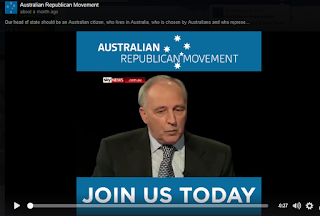
Former Prime Minister Paul Keating has
it right when he says our head of state should be an Australian
citizen, who lives in Australia, who is chosen by Australians and who
represents Australians.
We have our own identity as Australians. The Royals represent
Britain, but cannot represent us or unite us as Australians. Australians
believe in freedom and equal opportunity, not that some are born to
rule over others.
It's been a
huge 12 months in the journey toward an Australian republic. Among all the big
stories - the Premiers uniting behind our push, the axing of knights and dames,
the bungled $5 note.
At least there is one Federal election issue our leaders agree on! An Australian republic has support
from across the political spectrum. We have arrived at a unique
moment in the history of our country with the ARM's former Chair, Malcolm
Turnbull, now Prime Minister, and bipartisan support for an Australian citizen
to be our head of state from the Federal Opposition leader, Bill Shorten.
An Australian republic is back in the headlines, and our Movement has bold new
leadership with Peter FitzSimons AO. Right now, Australians are thinking and
talking about our national leadership, and our national identity, in ways they
haven't for a long time.
The ARM Queenslandinvites
you to our campaign focussed Discussion Evening. ARM
Queensland Members and Supporters Evening
Thursday 2 June 2016, from 6pm
Pineapple Hotel, Kangaroo Point
Entry: $10 – pay at door (includes light supper)
Guest Speaker for the evening is David Donovan, Managing Editor, Independent Australia.
The evening presents an opportunity to meet with fellow republicans and to hear
from ARM Deputy National Chair, Allison Henry Please RSVP
to qld@republic.org.au or at https://www.facebook.com/events/1075404372531962/
This is an event open to all republicans, so please don't hesitate forwarding
this invitation around widely.
Queen Elizabeth II is 90 today — 21 April 2016. It has
always seemed absurd that Australians acknowledge the birthday of Queen
Elizabeth II at a completely different time to her actual birthday. In
Queensland, it is even more absurd with moving it
this year from June to October. However, her image on the new $5
banknote certainly does not accurately reflect her age.
Today is Queen Elizabeth II’s actual 90th birthday. Congratulation to her.
In 2014, I asked on the public holiday given for her birthday in Queensland if it isn’t “time to break free?” At
the time, there had been a number of abdications by European monarchs.
Queen Elizabeth II is unlikely to abdicate. It is most likely the queen
will stand by her promise to serve as monarch for the rest of her life.
The only time she has suggested she may agree to abdicate is at the end
of Sue Townsend’s brilliantly satirical novel Queen Camilla,
in which the UK has elected a republican government and the Royal
Family has been exiled. Prince Charles will have to keep waiting.
The Reserve Bank of Australia has said that the new $5 note is a
birthday gift for the Queen and has unveiled the design of the new $5
banknote, including new security features to prevent counterfeiting. The Reserve Bank of Australia Governor, Glenn Stevens, said:
'Innovative new security features have been incorporated to help
keep Australia’s banknotes secure from counterfeiting into the future.
As can be seen in the images, these include a distinctive top-to-bottom
window. Each banknote in the new series will depict a different species
of Australian wattle and a native bird within a number of the elements.
On the $5 banknote, these are the Prickly Moses wattle and the Eastern
Spinebill.'
However, the release of the design with a centrepiece containing a
decades-old picture of a now 90-year-old monarch jolted social media
into a frenzy. There were comments across social media ridiculing the
design.
Here's the new Aussie $5 note
Will Fowles, Australian Republican Movement National Committee member observed:
'With the circulation of the new note likely to survive the
circulation of the monarch herself (the current iteration has been
around since 1992), is there not an opportunity to celebrate an
Australian on this prominent part of our national artistic real estate?'
Who could believe that, in 2016, in the reign of Malcolm
Turnbull, our government could – on deciding that the $5 note needs a
revamp – look out across our brown and pleasant land, survey the 50
million Australians who've ever lived, and decide none of them have
achieved in their own right anything good enough to be honoured with
their image on the note. No, let's look further afield, all the way to
England, and go to the Queen of England, and honour her principally as a
matter of her royal birthright! And let's touch up the photo so she
looks 30 years younger than she is. And then release what appears to be
yellow witchetty grubs on the note, crawling up the page in front of
her. I cringe. And I am happy to say, judging from the response, most
of Australia does too. It is nothing to do with Her Majesty – good luck
to her – and everything to do with us. At least our movement received a
surge in membership support because of it, and we will continue to grow.
This embarrassing farce must end.
Last year, we had the overwhelmingly repudiated
awarding of a knighthood to the Queen’s consort, Prince Philip.
Unfortunately the design of the new fiver again looks backward rather
than forward.
But what the nation’s wags have most embraced about the new design is the opportunity to reimagine our fiver with someone, anyone, apart from the Queen on it. Australian Republican Movement National Director Tim Mayfield commented
on a missed opportunity. Surely, in 2016, the Reserve Bank of Australia
can think of a more appropriate person to put on our national currency
than another nation’s monarch. It is not as if there is a shortage of
good candidates to choose from.
The Fred Hollows Foundation has recently been running an online petition campaign to “Put Fred on the Fiver”.
The idea received strong public support. The Fred Hollows Foundation
called on the RBA to replace the current picture of Parliament House
with Hollows’ face. The petition read:
'During Fred’s lifetime, ($5) was the price of a sight-saving
intra-ocular lens. But strangely enough, the $5 note is the only
Australian bank note which doesn’t recognise a great Australian.'
The legendary ophthalmologist was named Australian of the Year in
1990 for his lifelong work restoring the sight of thousands of people.
Call for Australia to change the face of the $5 note
The Reserve Bank of Australia has also said that changes to the Australian banknotes have been done now to commemorate the 50th anniversary year of conversion to decimal currency.
We’ve had controversy
with "royal" money before when in 1963, the staunch royalist, Prime
Minister Menzies, recommended calling the new Australian decimal
currency "royals". In this instance, the Australian people were not
troubled, they were outraged.
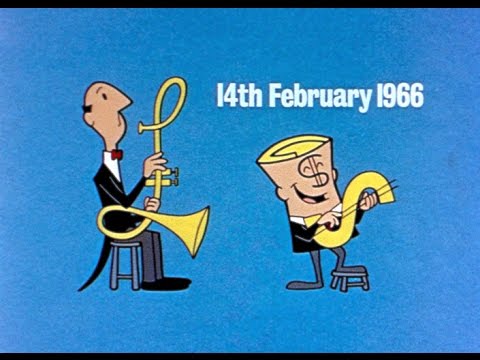
The Australian dollar was first introduced on 14 February 1966 when
it replaced the Australian pound and introduced a decimal system to the
nation. Although investigated as an alternative as early as 1901, the
decimal currency system was initially introduced to Australia as an
election promise by then Prime Minister Sir Robert Menzies in 1958.
There was much discussion about the name of the new currency, with
several specifically Australian names such as the "Kanga", "Austral",
"Merino", and "Dinkum" bandied around. A public naming competition
seeking suggestions with an Australian flavour added nearly 1000 names
to this list including such exotic suggestions as "Oz", "Boomer", "Roo",
"Kanga", "Emu", "Koala", "Digger", "Zac", "Kwid", and "Ming" (the
nickname of Prime Minister Menzies).
In June 1963, with no clear consensus having emerged on a name, the
government decided to name the new currency the 'Royal'. Treasurer
Harold Holt explained that the government saw this name as “emphasising our link with the Crown” and as being “a dignified word with a pleasing sound".
While the name "Royal" was settled upon initially, it proved extremely
unpopular with the Australian people. Just three months after announcing
the "Royal" decision the government conceded on 19 September 1963 that
the name of the currency unit would be the "Dollar". This decision won
quick and general public approval.
The official conversion to decimal currency took place on 14 February
1966. The jingle below became well known to many Australians in the
lead-up to the conversion date.
Decimal Change Over Song
In come the dollars and in come the cents
To replace the pounds and the shillings and the pence
Be prepared for change when the coins begin to mix
On the fourteenth of February 1966.
Chorus:
Clink go the coins, clink, clink, clink
Change over day is closer than you think
Learn the value of the coins and the way that they appear
And things will be much smoother when the decimal point is here.
In come the dollars and in come the cents
To replace the pounds and the shillings and the pence
Be prepared folks when the coins begin to mix
On the fourteenth of February 1966.
Dollar Bill and Australians Keep The Wheels Of Industry Turning
Thankfully, the 1960s Menzies government finally saw sense in not
pushing the "Royal" onto the Australian people. It was a term not
recognised as remotely appropriate by Australians. Fifty years later the
latest poll shows that just over 50 per cent of Australians don't want a
Royal as our Head of State.
Perhaps we have just provided another chant for the Barmy Army during cricket matches. No longer is it just "You're the convicts over there", "God Save YOUR Queen", and "Get your shit stars off our flag!" (a phrase which always reminds me of Jerry Seinfeld's comment: "I love the Australian flag — Britain at night!"), there could now be “Get our Queen off your fiver”.
Australian life has been undergoing processes of change for a long
time. Fifty years ago, decimal currency replaced Imperial pounds,
shillings and pence in Australian commerce. Four years after that, we
replaced Imperial measurement with the metric system. Surely the
Australian people deserve a say in matters of national identity both
great and small. We need to wrestle back our fiver and put our own
people on our currency rather than an English aristocrat who lives in a
castle in another country 9000 kilometres away. Removing the Queen from
the fiver should not be considered an act of disrespect — she still occupies half of all our coins.
It’s high time we have an Australian as Head of State.
On 3 March 2016 I had the honour of being awarded the 2015 Republican of the Year Award by Peter Consandine, National Director, Republican Party of Australia at a dinner in Ashgrove, Brisbane. The MC for the evening was Cr Paul Tulley, Ipswich City Council and 1998 Constitutional Convention delegate from Queensland.
Glenn (left) & Brian Davies
Biography of 2015 Republican of the Year
Dr Glenn Daviesis a teacher, author, republican
activist, and historian who
was raised and educated in the north Queensland goldfield community of Charters
Towers. He is currently Head of Social Science, Craigslea State High School in
northern Brisbane. Since
1991 he has taught ancient and modern history in a number of state high schools
around Queensland and has written five secondary school history textbooks. In
any spare time, which seems increasingly rare, he is an occasional science
fiction writer and reviewer, and has been an Aurealis Award SF Short Story
Judge. He believes strongly in the epithet ‘publish or perish’ – no matter how
constant and demanding the teaching load, it is vital, as historians, to be
writing.
Glenn’s 1988 James Cook University BA Honours thesis and 2005 University of
New England PhD were on the history of Australia’s republican past. During the
past twenty-seven years he has published numerous academic articles, newspaper
and online columns, and chapters in books on the topic. He has taught political
science at Illinois State University, history at Central Queensland University,
and history education at Australian Catholic University.
Glenn joined the Republican
Party of Australia in 1988, and later moved to the Australian Republican
Movement in 1993 where he was the Forum Coordinator for Hinkler in the 1990s,
and in 1999 ran the YES campaign at the Glasshouse Mountains booth. In
2005 he was elected to the ARM Queensland Branch Council. In 2007 he negotiated
the Queensland Teachers’ Union vote to become the first organisation to join
the new membership category – ARM Supporter. In 2007 he was elected
Queensland Branch Secretary and re-elected in 2009. In 2010 he was elected
Queensland Branch Convener, ARM.
Glenn wrote a continuing
history column in the long-running Queensland ARM quarterly newsletter Armlet
from 1995-1999. In the late-2000s he was editor of Armlet, and the
bi-monthly national Republican Roundup. He now edits the national Campaign
Update. In 2009 he established the annual National Republican Short Story Competition and edited the Speculating on the Australian Republic
anthology ebook. He is
also the history editor and a regular columnist for Independent Australia and blogs monthly on
republican issues.
Glenn lives in northern Brisbane with his beautiful wife and two
gorgeous kids, a haughty cat, and a King Charles Cavalier who has recently
agreed to renounce the monarchy and accept his republican family’s ways.
If you're making one, he prefers his coffee instant with lots of milk. No sugar. Thanks.
3.1993Peter
Collins, (then) New
South Wales Senior Liberal Parliamentarian
4.1994Charles
Windsor, Monarch-in-Waiting
5.1995Paul
Kelly, Editor-at-Large,
The Australian newspaper
6.1996Bill
Clinton, (then)
President of the United States of America
7.1997Bob
Brown, (then)Tasmanian Greens Senator
8.1998Bill
Leak, Cartoonist, The
Australian newspaper
9.1999Peter
Consandine, Founder
(1982), National Executive Directorand
Bankroller-Perpetuale, Republican Party of Australia
10.2000George
Winterton*, (then)
Professor of Constitutional Law, UNSW
11.2001Geoffrey
Robertson, International
Human Rights Campaigner
12.2002Helen
Irving, Senior Law
Lecturer, University of Sydney
13.2003Mark
McKenna, Historical
Author and (then) ANU Academic
14.2004Peter
Lalor, Great Great
Grandson of the Eureka Rebellion Leader
15.2005Phillip
Adams, Columnist, The
Australian newspaper; NationalBroadcaster
with the ABC and National Living Treasure
16.2006Dean
Jaensch, SA Academic,
Historian and Expert Political Pundit
17.2007David
Black, WA
Parliamentary Fellow; Historical Consultant to The John Curtin Prime
Ministerial Library and Expert Political Pundit
18.2008Jenny
Goldie, Sustainable
Population Activist and Eminent Exponentof ‘Quiet Republicanism’
19.2009David
Muir, Chairman of Real
Republic Ltd and Legator of TheClem
Jones’ Republican Bequest
20.2010Peter
Ellyard, Futures
Strategist, Author and Motivational Speaker
21.2011Terry
Fewtrell, (then)
Founder of the Republican Gatherers organisation and President of the
Canberra-based Wattle Day Association
22.2012Tony
Heath, Founder of the very first Tasmanian business with the
word ‘Republic’ in the name heading
23.2013Fred
Carter, Prominent
Victorian Australian Democrats Party Republican
24.2014Harry Evans*, Former Clerk of
the Australian Senate
25.2015Glenn
Davies, Queensland
Convenor, ARM; Founder, Annual National Republican Short Story Competition
& Editor, Speculating on the Oz Republic Anthology E-Book